 |
Fourteen
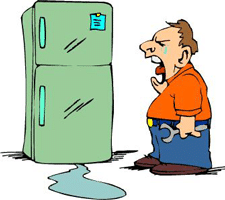
years ago my husband and I decided to build a new home for our family. I still
remember feeling thrilled with the “new home” smell and everything being clean
and new. For the first few years, our home was relatively maintenance-free. As
the years go on, however, we occasionally experience problems that need our
immediate attention: a leaky dishwasher, flooded basement, and burned out light
bulbs, just to name a few. When these less-than perfect issues arise, we don’t
throw
 |
| http://cesarsappliancerepair.com/images |
Marriage is much the same way. The first few
years may seem blissful and nearly perfect. But eventually issues will arise
that require our attention. Rather than throw up our hands and abandon the
marriage, husbands and wives need to identify what the problematic issues are
and then work together to correct or fix them. However, identifying the problem
can sometimes be a problem in and of itself. My husband and I have often felt
at times that something was amiss in our relationship but couldn’t seem to put
a finger on it. At those times we tend to revert back to the same old practices
and behaviors, which certainly does nothing to fix the problem.
 |
| https://s-media-cache-ak0.pinimg.com/originals |
So how can we learn to identify the areas of our marriage
that are causing problems? Dr. John Gottman has spent the last 40 years
studying thousands of married couples and has learned some of the habits that
can make or break a marriage. In his book The
Seven Principles for Making Marriage Work, Dr. Gottman identifies some of
the problematic issues married couples face as The Four Horsemen of the
Apocalypse: Criticism, Contempt, Defensiveness, and Stonewalling.
Horseman 1: Criticism
- Criticism occurs when you express negative feelings or emotions about
your spouse’s character or personality. “You are always late picking me up! Why
can’t you be on time for once?”
 |
| http://d1o2pwfline4gu.cloudfront.net |
Horseman 2: Contempt
– Contempt is a form of disrespect and occurs when one spouse assumes a sense
of superiority over the other. “You can’t even keep your car clean! What makes
you think you’d be able to take care of a boat, if I let you get one?”
Horseman 3:
Defensiveness – Being defensive is a natural reaction but only serves to
escalate the conflict and serves as a way to deflect negativity back onto the
other person. “Why are you always on my case? How come you can’t see all of the
things I did get done today?”
Horseman 4:
Stonewalling – Stonewalling occurs when the negativity becomes so strong
and overwhelming that one spouse completely shuts down and tunes out of the
conversation.
These four horsemen and their destructive potential will
make their appearance in every marriage. The critical factor in determining
whether or not they will make or break a marriage is if they are allowed to
take up permanent residence or sent galloping on their way. According to Dr.
Gottman, the key to kicking these four horsemen out of your marriage “is to
strengthen the friendship and trust that are at the heart of any marriage.
Whatever the current state of your marriage, it will benefit enormously if you
support, reinvigorate, or, if necessary, resuscitate your friendship.”
(Gottman, 2015, p. 51-52).
 |
| http://andafunda.com/wp-content/uploads/2015 |
To go back to the home repair analogy, fixing
a leaky dishwasher will cause some inconvenience, but if it’s not taken care of
soon it will eventually lead to water damage in the structure of the house that
is much more expensive and difficult to repair and recover from. Likewise,
identifying areas in a marriage relationship that need improvement can be
painful, but not doing so will result in continued behaviors and practices that
will wear your marriage down and cause damage that is difficult to recover
from. And remember, once you find those areas of your marriage that need
repair, the first place to start is in building up a solid foundation of
friendship with each other.
Source:
Gottman, J. M., & Silver, N. (2015). The seven
principles for making marriage work: a practical guide from the country's
foremost relationship expert. New York: Harmony Books.

No comments:
Post a Comment